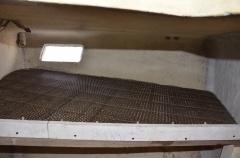
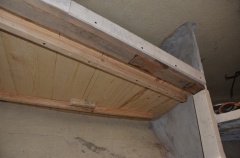
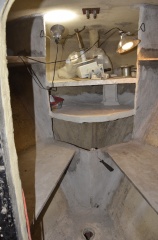
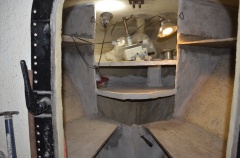
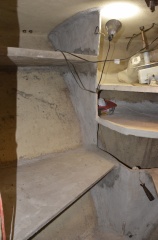
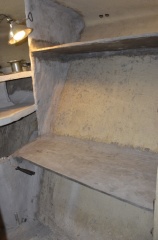
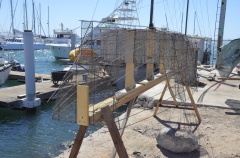
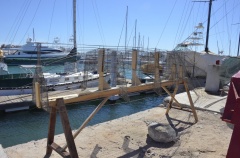
Gallery of Ferro-Cement Work: I made shelving and semi-walls in my bowroom as well as a chain locker. These photographs detail that work ,as well as work I have begun on a ferr-cement dinghy. Click on a photograph to see a larger image with caption and link to the previous and next photographs...

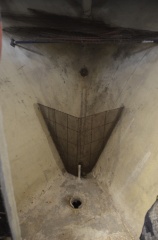
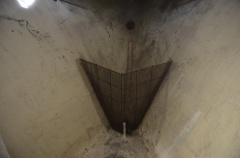
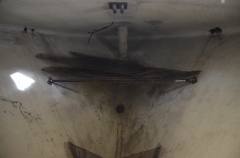
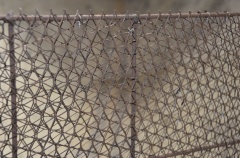
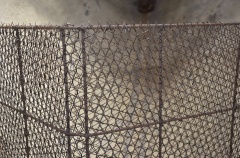
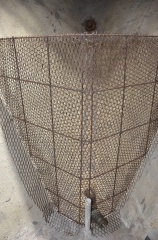
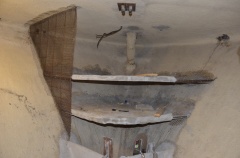
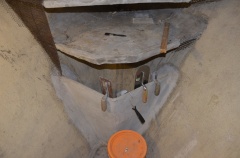
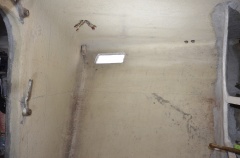
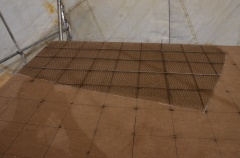
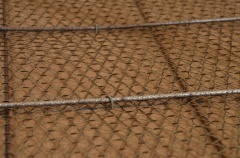
  Bowroom before, with first armature in place Closeup of the armature Other armatures in space above chain locker (foxhole) Closeup from above armature for chain locker Closeup of the armature, made of expanded steel in four layers, two of which are embedded within the welded framework which is welded 5/32  

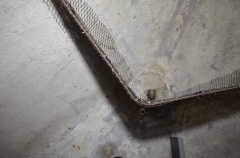
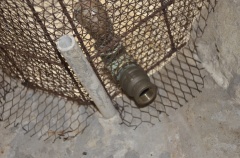
  Different angle and position of the chain locker armature Closeup of entire armature including lathing cloth used to blend to walls and floor Closeup of mating of armature to existing cement of hull demonstrating lack of attachment before plastering Closeup of bronze drainage for chain locker.  Fittings on ends are to keep threads clear of cement during plastering Chain locker completed, two shelves complete, armature for first wall in place ready to plaster  

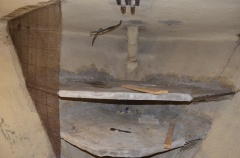
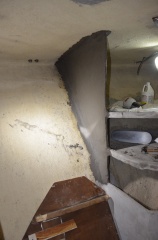
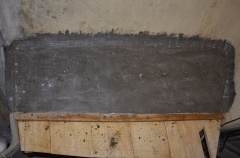
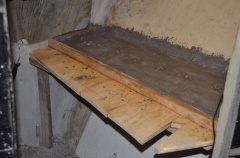
  Different angle showing armature in place Closeup showing unfished plastering on shelves demonstrating attachment of walls to shelves Finished chain locker - in use to hold tools.  This chain locker is being called the Fox Hole, as a joke because of the nautical term Wall freshly plastered and showing part of mold for top shelf Closer view of the freshly plastered wall  

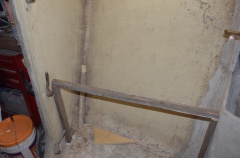
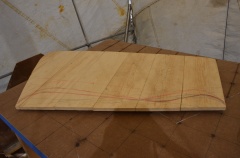
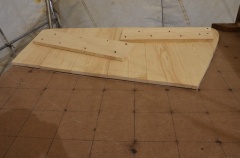
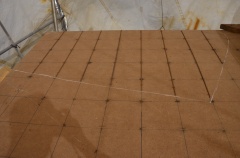
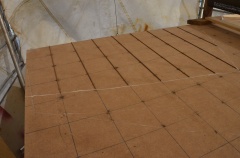
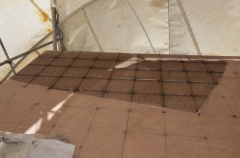
  Mold support in place for shelf before Space for upper shelf before showing marks This is the process for making an armature.  The mold was removed from the support shown above.  The mold is then traced, and the armature is made on a plywood marked with a 6 Mold placed on with shelf edge on edge of plywood and traced Rebar is placed in one direction on grids within traced shape of mold  

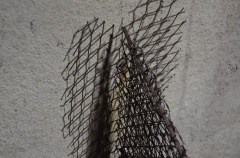
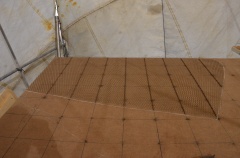
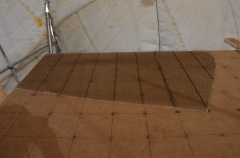
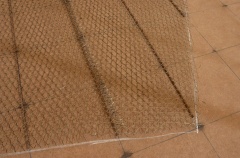
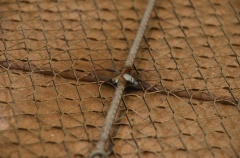
  Another angle showing rebar which has been stapled to the table First layer of lathing cloth (expanded steel) is laid out in one direction The second layer of expanded steel is then laid on top.  Note the splice.  The expanded steel comes in 1 meter wide rolls and must be joined to maintain the strength of the armature Closeup of the splice After the second layer is laid down, rebar is welded above the wire in the opposite direction  

  Large hand-driven staples are used to hold down the rebar for welding.  A tack or spot-welder would be more suitable for this job but I have MIG and that's what I use The armature after welding Closeup of a weld The finished mold after placement and plastering Another view of the plastered armature in the mold and on its temporary support  

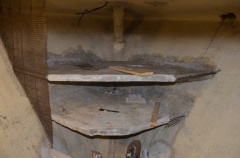
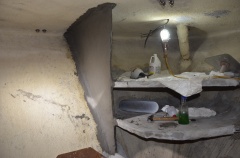
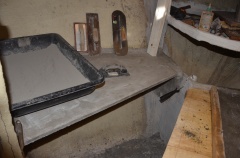
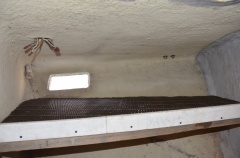
  View of the previous shelf, in place and out of its mold, with a batch of dry plaster ready to add water and mix View of armature for largest shelf in place on mold Another view of armature showing mold for front edge and dowels for holes through shelf.  Ferro-cement is extremely difficult to drill through or attach anything to with hardware.  So rather than bringing out my diamond bit drills and heavy duty hammer drill, I make the holes ahead of time Bottom of the mold and showing the support Completed bow room.  Now the windlass can be installed (done) and the shelves painted and put to use (done and done)  

  Another view.  By the way, I have waterproof submarine type doors on my ship Closer view of the shelves and wall Other side shelves.  Note the thickness of the shelves.  They are incredibly strong.  I stand and jump on them without fear of breaking them And now we come to the dinghy.  This view shows the transom.  The whole dinghy is upside down at the moment Another view.  That's Disperser in the background on the right, covered in sailcloth as I've made a shop out of my foredeck which is where I make all the armatures  

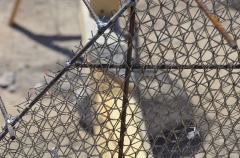
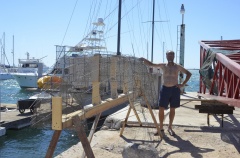
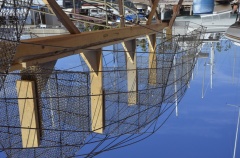
  Closeup of the armature, same design as the shelves.  Note that the four layers of wire each go in a different direction, and that two of them are between the rebar.  That is my patentable ferro-cement armature design.  You are seeing something that has never existed before. Front view of the dinghy.  The extra rebar coming off the front are to make into the bow though I may make separate armatures to give myself a very strong prow on this canoe-style dinghy Yes, my ugly mug next to the dinghy for scale And here is the dinghy right side up, although the world is now upside down...  

created with igal2 2.0